Moscow has an urban-planning axis: the Kremlin, the never-built Palace of the Soviets, Luzhniki and Moscow State University. In the vision of the builders of communism, a strong and healthy society formed at Luzhniki would reach a bright future with the help of the university's knowledge.
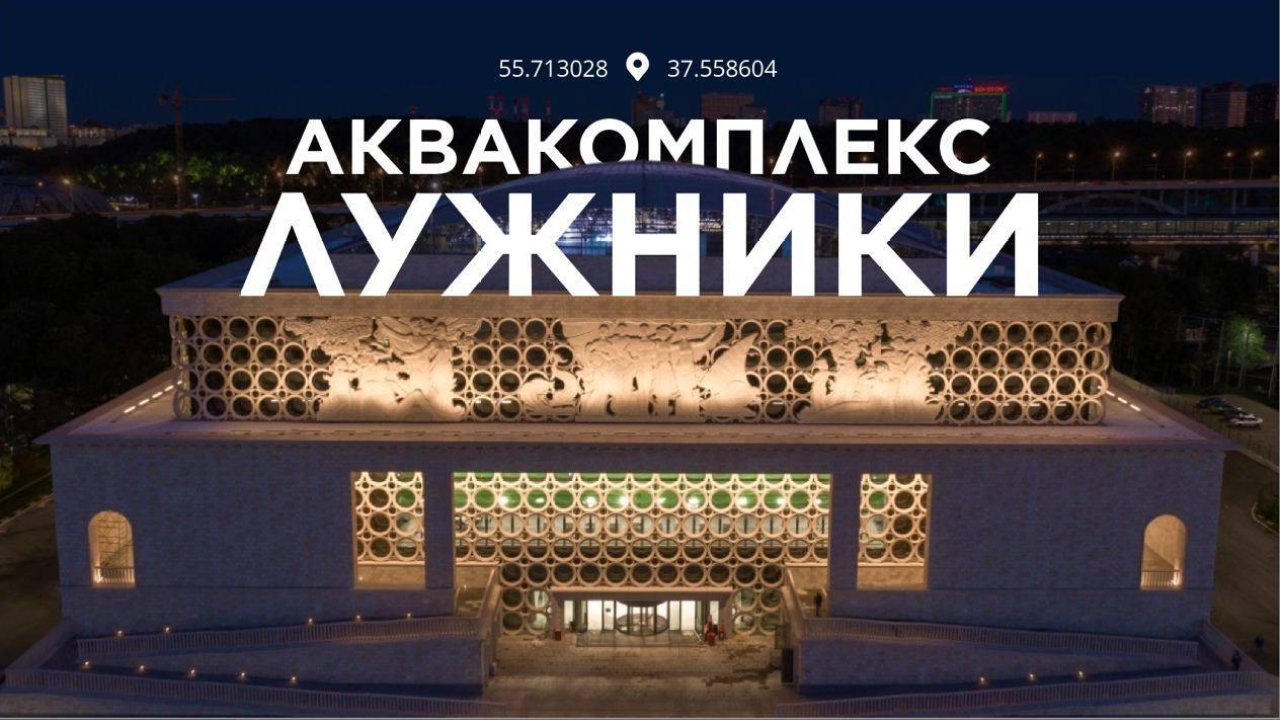
The competition's task was not just to modernise the pool but to fit it into a modern sports park. The floor area grew from 20,000 to 60,000 square metres. To make the new building look like a continuation of the old one, the architects studied archive drawings, photographs and the biographies of the first pool's builders, kept the colour and details, and transferred the sculptures and bas-reliefs as exact digital copies.
Where preservation was impossible, they had to invent: the architects showed the lost elements as "ephemeral" wire figures — this is how the building tells its story.