The Boulevard Ring is usually seen as the centre of Moscow, but on the other bank of the Moskva River lies Zamoskvorechye — the main district of Moscow's merchants. Moscow is a classic radial-ring city: the Kremlin in the centre, defensive rings around it, and the river protecting it from the south. Zamoskvorechye was its near suburb across the river.
Merchants settled here by the wharves where ships arrived with grain, salt and other goods: it was convenient to live next to the warehouses, and outside the city limits — further from city rules. After the conquest of Kazan, a Tatar quarter and the first Moscow mosque appeared here, and Russian and Tatar cultures lived side by side for centuries.
In the early 19th century, after the fire of 1812, Zamoskvorechye fully became part of the unified city system. Today it is a district that has kept its identity: merchant manors stand next to the city's major museums and contemporary art centres.
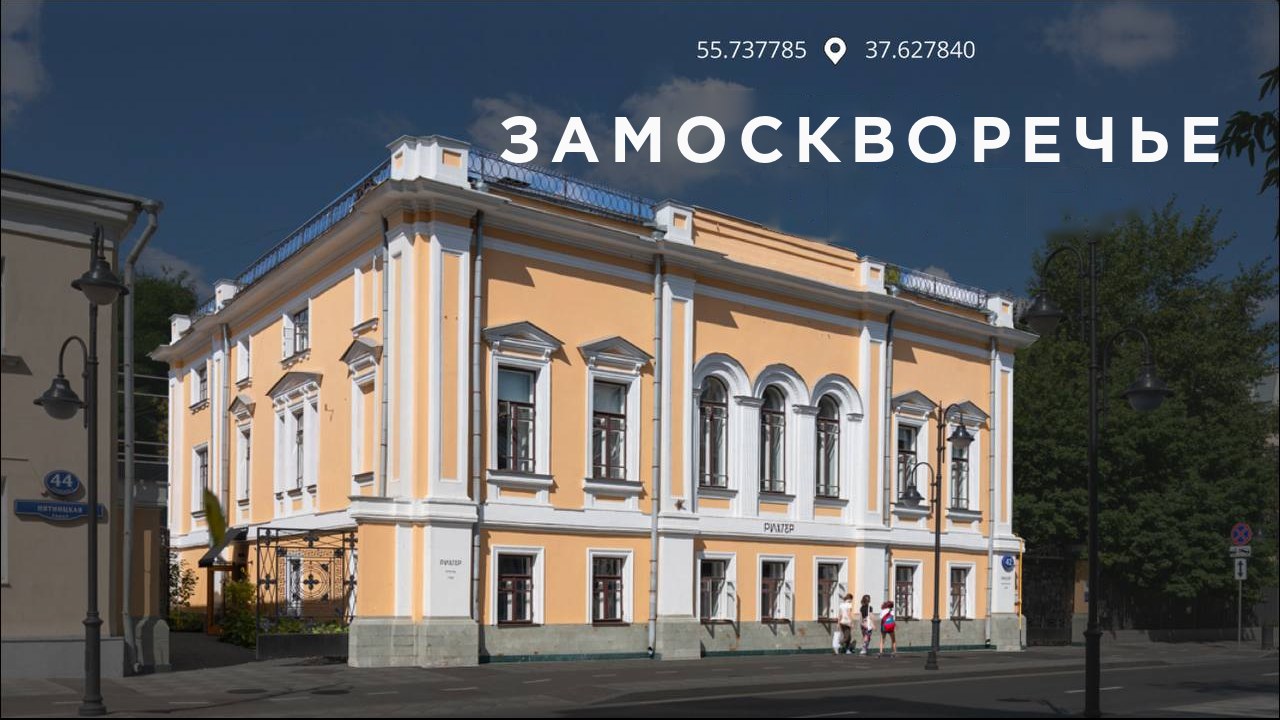
In the view of Moscow's Chief Architect Sergey Kuznetsov, the future of Zamoskvorechye lies with people who are interested in culture in all its forms — from the most classical to the most contemporary. The Richter boutique hotel on Pyatnitskaya is part of this environment.